What you get
- Natural meaning in plain English
- Why the word order looks strange
- What the sentence is actually asking you to do
One of the most frustrating parts of German is this feeling:
You understand the first half of the sentence, then the verb arrives at the end and forces you to re-interpret everything.
The short answer
German often pushes the verb to the end when a clause starts with a subordinating word like:
weilwenndassobwohl
These words signal that the clause depends on another idea. German marks that dependency by moving the conjugated verb to the end.
Example
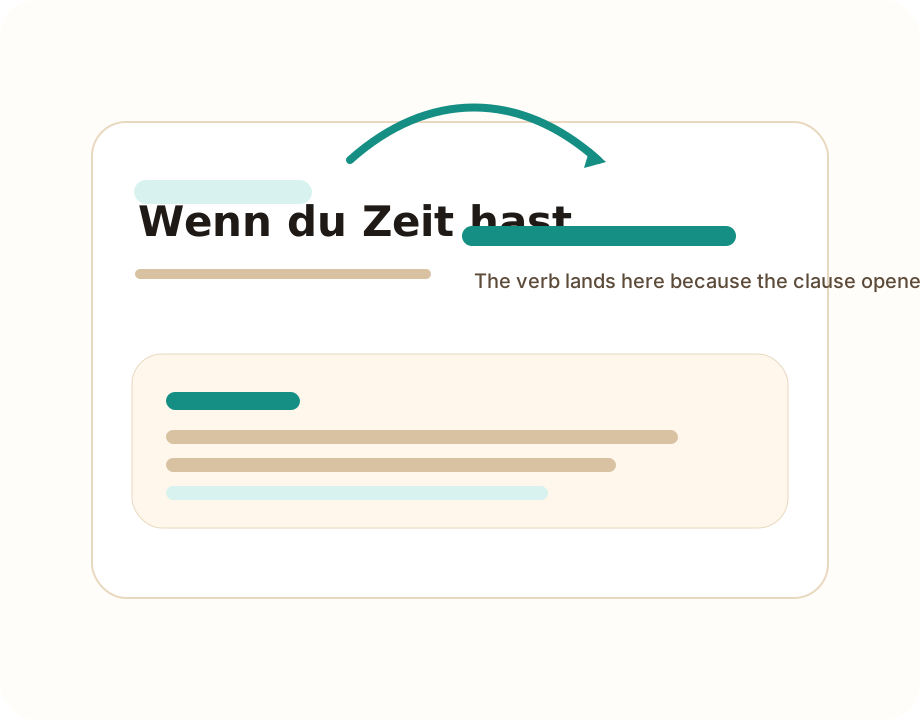
Wenn du Zeit hast, ruf mich später an.
In the first clause:
Wennintroduces the clausehastmoves to the end
In the second clause:
ruf ... anis a main clause with a separable verb
So you are dealing with two different word-order rules in one sentence.
Why this feels hard for English speakers
English usually reveals the verb early. German often makes you hold the sentence in memory for longer before the full structure becomes clear.
That is why learners often know the words but still feel lost.
A better way to read these sentences
Instead of translating one word at a time, train yourself to look for:
- the clause opener
- the main subject
- the final verb position
Once you know that pattern, the sentence becomes much less mysterious.
Where SentenceLens helps
SentenceLens makes the clause type visible and explains:
- why the verb moved
- where the main clause starts
- how the sentence would sound in more natural English
That is much more useful than just seeing a raw translation.