What you get
- Natural meaning in plain English
- Why the word order looks strange
- What the sentence is actually asking you to do
Housing German is a category of its own.
Even short messages from a landlord or building management company can feel vague, indirect, or strangely formal. The problem is not just vocabulary. It is the mix of requests, passive phrasing, and compressed sentence structure.
Why landlord German is tricky
You often see:
- passive or impersonal phrasing
- date and time details tucked into the middle of the sentence
- polite requests that are actually instructions
- vocabulary you rarely see in learning apps
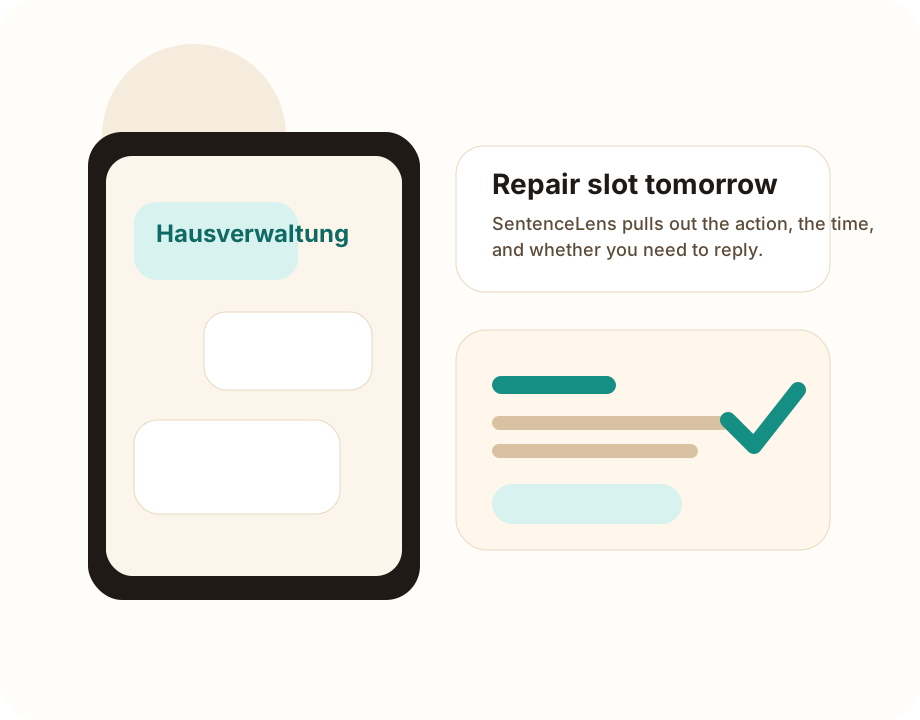
What SentenceLens highlights
For a landlord message, you want more than a translation. You want to know:
- what action is required
- when it has to happen
- whether the tone is a request, a reminder, or a warning
- which part of the sentence changes the meaning
SentenceLens makes those parts explicit.
Typical scenarios
- maintenance appointment notices
- rent or utility explanations
- moving-in instructions
- building access messages
- neighbor complaints or house rules
Example pain point
Landlord German often hides the main point in a clause like:
Falls Sie den Termin nicht wahrnehmen können, bitten wir um kurze Rückmeldung.
The key is not just "we ask for a short reply." It is understanding the condition and what response is expected if you cannot attend.
Why this matters
You do not want to misunderstand:
- a repair appointment
- a required reply
- an access instruction
- a contract-related notice
SentenceLens helps you read these messages like a person who understands how German is put together, not like someone guessing from keywords.